
 Free Delivery & Return
 365-Day Returns
 10 Million Happy Customers
 500,000 Products in Stock


Bookcases & Shelving Units


Bookcases & Shelving Units
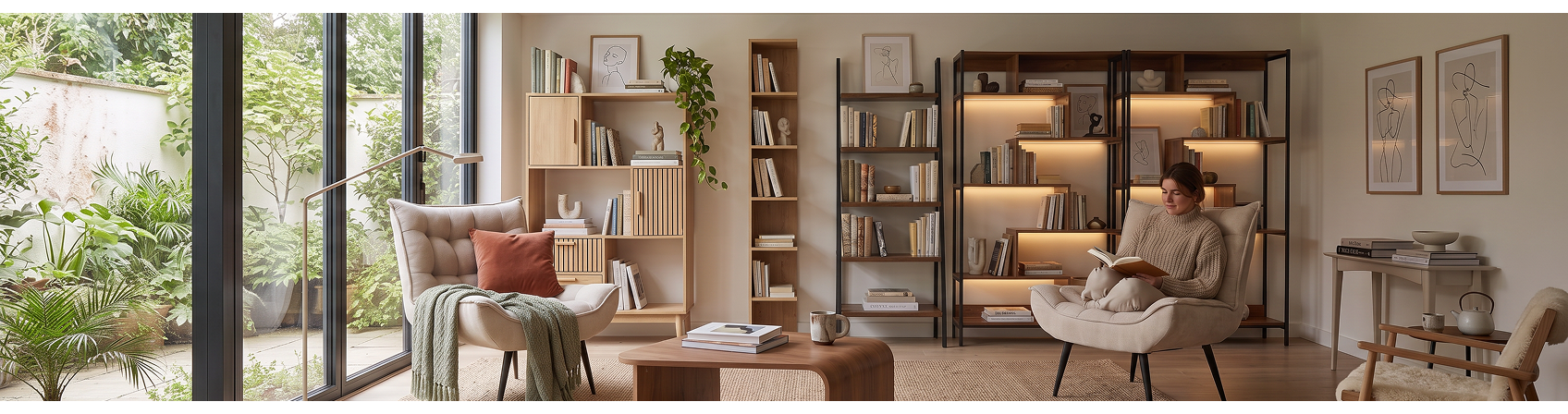
Bookcases and shelving units do much more than hold books. They help organise everyday items, display decorative pieces, and make better use of empty walls and corners. Before choosing one, think about where it'll go, how much storage you need, and whether you want it to blend into the room or stand out as part of the décor.
What materials work best for bookcases and shelving units?
The material affects not only how it looks but also its durability and maintenance.
Wood and engineered wood
Wooden bookcases remain one of the most versatile choices. Oak-effect finishes add warmth, while painted finishes work well in contemporary interiors. Engineered wood is practical, easy to maintain, and available in a wide range of colours and textures.
Metal shelving
Metal frames are often paired with wooden shelves to create an industrial look. They're sturdy and work particularly well in loft-inspired spaces, home offices and modern living rooms.
Glass and mixed materials
Glass shelving gives a lighter, more open feel and can make smaller spaces appear less crowded. Mixed-material designs combining metal, wood and glass have become increasingly popular thanks to their flexibility across different interior styles.
Which bookcase design suits your space best?
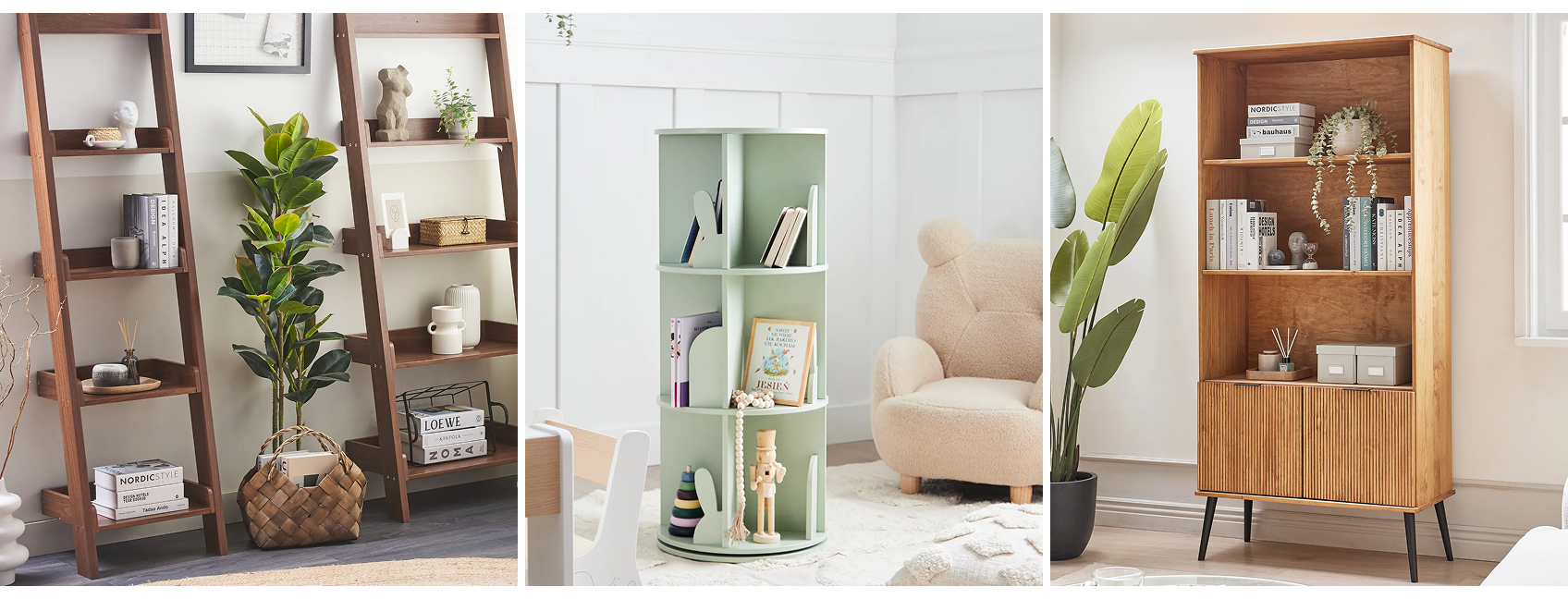
Not all shelving works the same way. Tall bookcases are ideal when floor space is limited, while wide, low shelving units can double as display furniture in living rooms or home offices. Open shelves create a lighter look and keep frequently used items within easy reach, whereas models with doors or drawers help hide clutter.
Popular designs include:
- Ladder shelves for smaller rooms and casual interiors.
- Cube shelving units for mixing books, baskets and decorative objects.
- Wall-mounted shelves where floor space is at a premium.
- Industrial-style bookcases with metal frames and open shelving.
- Bookcases with cabinets for combining display and concealed storage.
It's also worth considering shelf depth. Standard books fit comfortably on shallower shelves, but larger volumes, storage boxes or vinyl collections need more room.
Are open shelves still in style?
Absolutely. Open shelving continues to be one of the biggest interior trends because it allows people to personalise their spaces. Instead of filling every shelf with books, many homeowners combine practical storage with framed photographs, ceramics, plants and decorative lighting.
Current trends include asymmetrical shelving, rounded edges, natural wood finishes and modular designs that can be expanded over time. Black metal frames and lighter oak tones remain especially popular because they work with both minimalist and Scandinavian-inspired interiors.
How do you choose the right size?
Measuring the available space sounds obvious, but it's often overlooked. Leave enough room around the unit so shelves can be accessed comfortably and avoid placing very tall bookcases in areas with low ceilings.
Before buying, consider:
- The height of the ceiling.
- How many items need storing now and in the future.
- Whether it'll sit against a wall or divide a room.
- If heavier items require reinforced shelves.
- Whether wall anchoring is recommended for additional stability.
Using a bookcase as a room divider has become particularly popular in open-plan spaces, as it creates separation without blocking natural light.
Can a bookcase make a room feel bigger?
Surprisingly, yes. Choosing an open-backed design allows light to pass through, making a room feel less enclosed. Wall-mounted shelving keeps the floor visible, which can help compact spaces appear larger. Matching the finish of your unit to existing furniture also creates a more cohesive and spacious look.
In smaller rooms, lighter finishes and slim frames tend to feel less bulky than dark, oversized units.
What should you check before buying a bookcase?
Think about how it'll be used day to day. A display shelf for a few decorative pieces has very different requirements from a bookcase carrying dozens of hardback books. Check shelf dimensions, weight capacity, material finishes and whether assembly is required. Choosing the right design comes down to balancing storage needs, available space and the overall style of the room. Whether you prefer a simple wall shelf, an industrial bookcase or a modular shelving system, the right piece should make organising your home easier while fitting naturally into your existing interior.